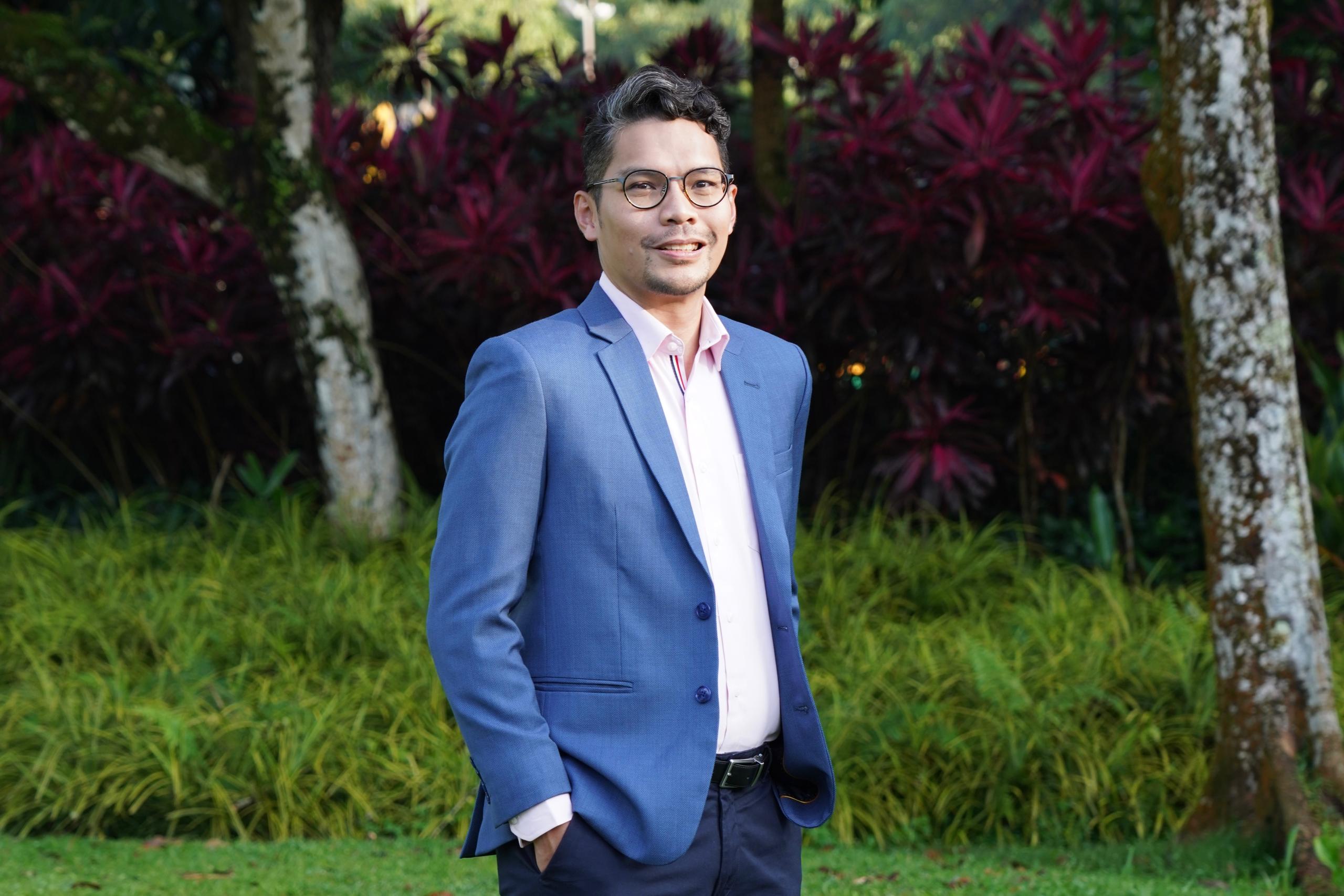


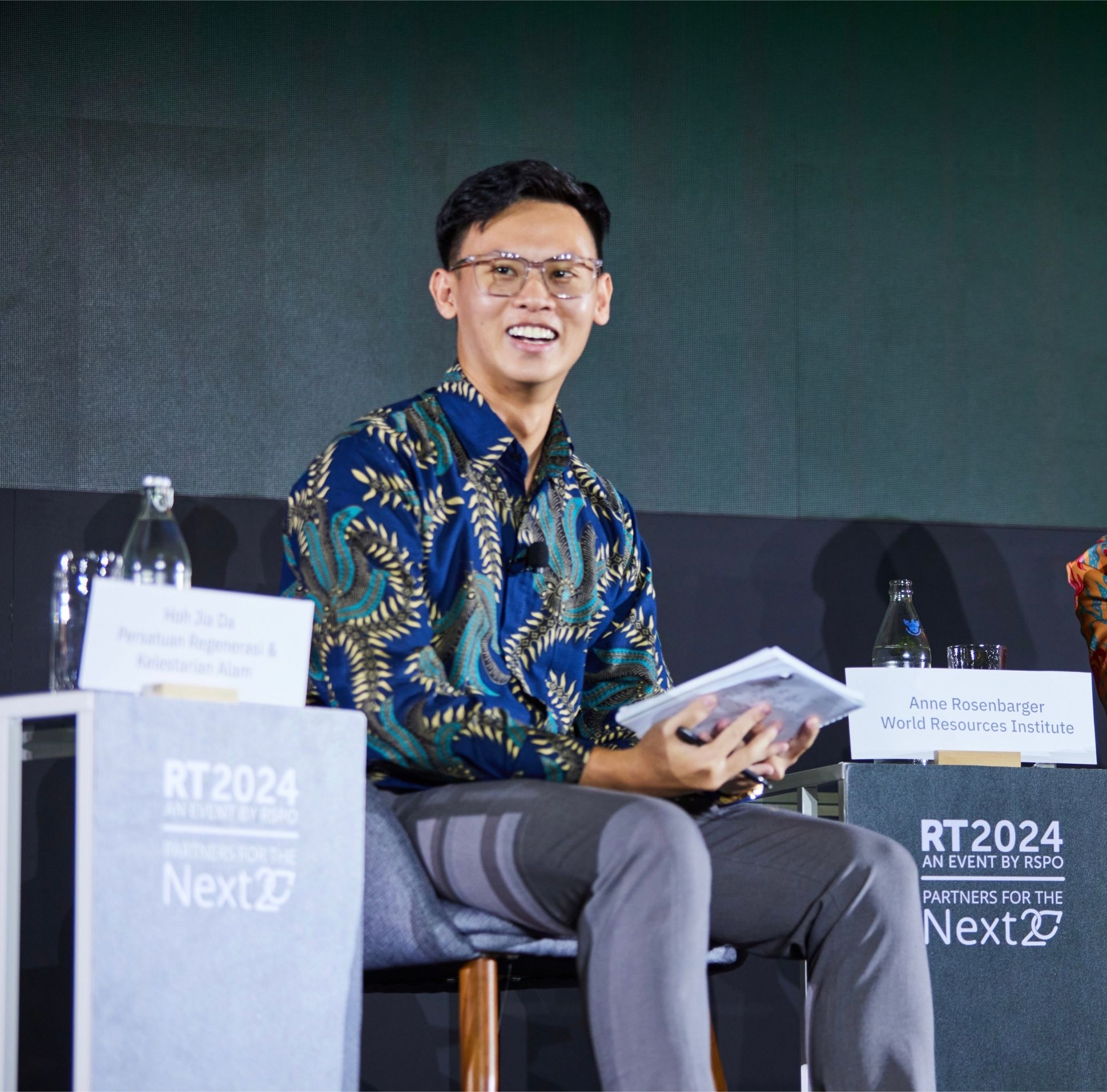
Moments before he was due to take the stage as moderator at a sustainability conference in Bangkok, Thailand, Hoh Jia Da, or JD as he prefers to be called, glanced at his inbox.
He was convinced his Rhodes Scholarship interview had gone badly. He had already phoned his sister, who had run his mock interviews, to confess that he had fumbled it.
The email told a different story. He had been selected for one of the world’s most prestigious and fiercely contested scholarships, chosen from hundreds of applicants.
“First it was shock,” he recalls. Disbelief soon gave way to gratitude towards his family, his mentors and the lecturers who had written his reference letters. The scale of it only sank in that night, as he rode on the back of a Grab motorbike to a Muay Thai bout. “Wow, I actually got a scholarship.” His eyes welled up.
From “Little Flying Fish” to “the guy on crutches”
In primary school, JD was known as the “Little Flying Fish” for his outstanding performances at swimming competitions. At 13, an accident brought his swimming to an abrupt halt. Yet giving up competitive swimming affected him less than one might expect. His foremost concern was whether he would ever walk again. He vividly recalls the X-ray room, where his fractured legs had to be stretched for the scan, an ordeal that was “super painful” despite heavy anaesthesia. His other worry was more modest: how to return to class and pick up his life at boarding school again.
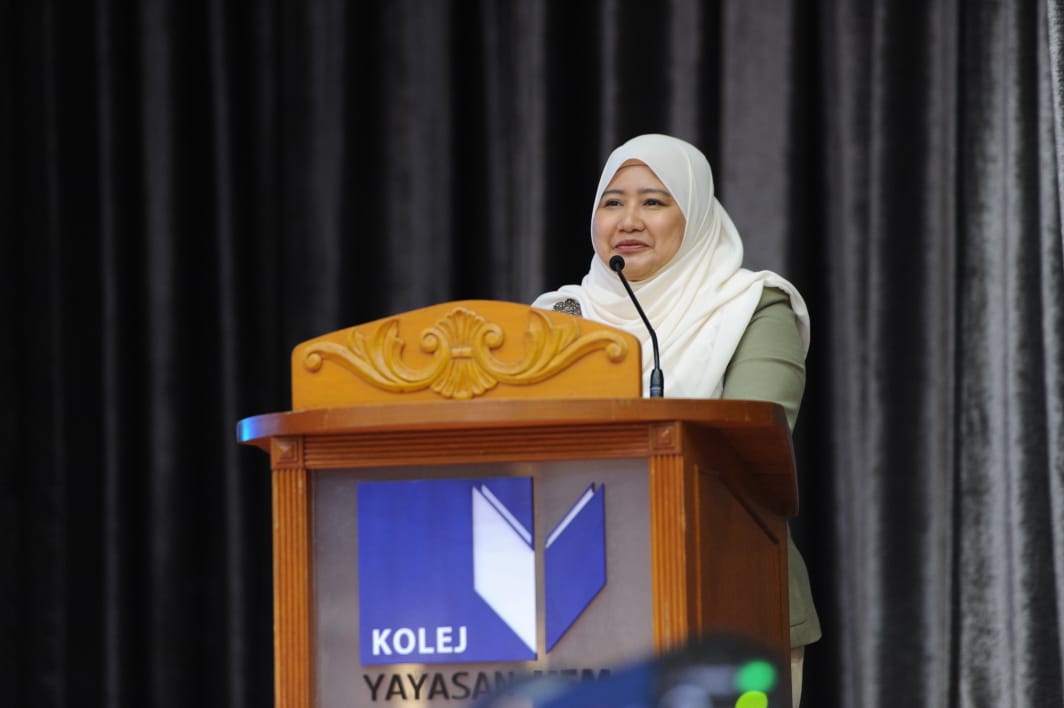
Reflecting on his five years at Kolej Yayasan Saad (KYS), JD names three things he wishes he had done differently.
The first is listening to his doctor. He ignored medical advice, fractured his leg a second time, and prolonged his recovery by two years. Among his teachers, he became known as “the guy that’s always on crutches.”
The second is embracing the school’s co-curricular programmes, particularly the Axiata School Leadership Development Programme (SLDP). He and his friends did not fully appreciate them at the time, and only saw their value in hindsight. “We learned about startups when we were 15, when other people heard about it in university.”
That head start became clear once he reached university. When he began entering business and innovation competitions, he realised how much of what SLDP had tried to teach him, such as identifying a problem, building a business model and pitching an idea, was exactly what judges were looking for. Entrepreneurial skills, he came to see, are not only for people who want to start companies. They teach you to spot opportunities, take ownership of a problem and convince others to back your idea, skills that matter in every career. He wishes he had taken them seriously at 15, rather than learning them from scratch at 19.
The third is stepping outside his comfort zone. He stuck to chess and swimming and steered clear of debate, Model United Nations and the World Scholar’s Cup. Looking back, he wishes he had found the courage to try them too, even though they felt unfamiliar at the time. He points to accomplished debaters as an example of how far strong speaking skills can take a person.
Communication, he stresses, is a skill we use every day, and it can make or break your chances. In competitions, you need to convince judges that your idea is worth backing. In interviews, you need to explain your experiences clearly and reflect on what they taught you. Many people have great ideas but struggle to share them well, and a brilliant idea explained poorly loses much of its impact. Activities like debate and MUN build exactly these skills, and students who start early go into competitions and interviews with a real advantage.


Saying yes to everything at UPM
Missing out on an overseas scholarship, while most of his KYS peers headed abroad, was a bitter disappointment. Rather than dwell on it, JD decided to treat university as a “reset button”.
To him, that meant leaving behind the labels he had picked up at school and starting a fresh chapter written on his own terms. Whatever had happened before no longer defined him. What counted was what he did next.
He hopes every student who did not secure an overseas scholarship after SPM hears this: do not give up. Use the disappointment as fuel to work harder. JD is living proof that an overseas scholarship at 18 is not the only route to the world stage. Years later, he made it to Oxford anyway.
From orientation week, he seized every opportunity within reach, starting with events at UPM’s Centre of Entrepreneurial Development & Graduate Marketability (CEM). His KYS seniors were another source of inspiration, and earning a place in the Perdana Fellows Programme became a fixture on his bucket list.
He was deliberate about it, too, and LinkedIn became his most useful tool. He followed people who had joined top competitions and programmes, saved their posts, noted the application deadlines and set himself the goal of joining the same ones the following year. Once he entered his first competition, the algorithm began surfacing many more, and momentum built on itself. Opportunity, he discovered, favours those who go looking for it.

Compete to win, not just to learn
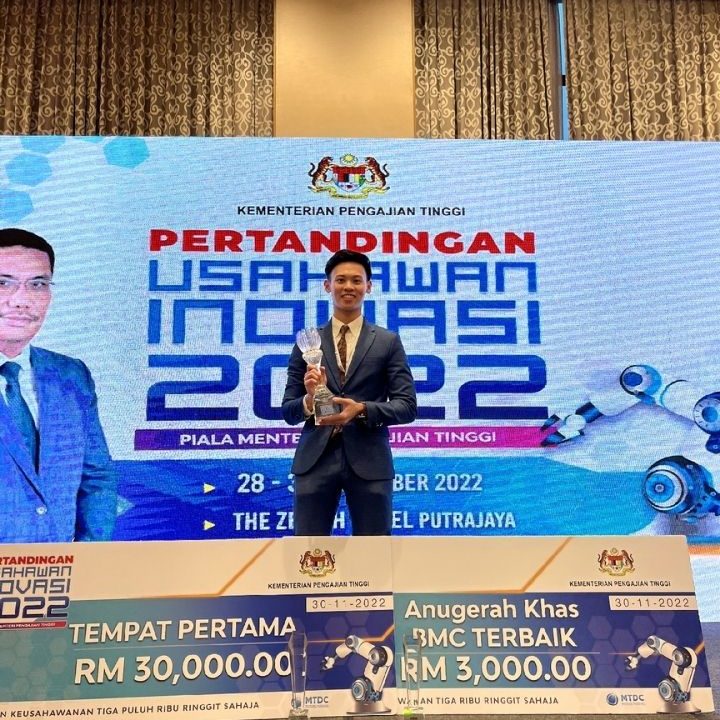
Ahead of his first competition, his parents gently warned him not to get his hopes up, as rivals with business backgrounds would be tough to beat.
JD understands the feeling that holds many students back. Plenty of them are afraid to join competitions because they feel small, insecure and sure they will lose. He felt exactly the same before his first one. That fear is normal, he says. Even someone who has gone on to win national and international competitions had to start somewhere, nervous and unsure, just like everyone else.
For first-timers wrestling with nerves, his advice is twofold:
1. Just apply. You don’t need to feel ready. Now that AI makes it easier for everyone to come up with ideas, competitions are more crowded than ever. That’s all the more reason to put yourself out there. Keep joining, because one day your idea could be the one that wins the judges over.
2. Then compete with a winning mindset. “Learning, you leave to class. When you go to a competition, you’re here to win.” That conviction sharpens your focus on what the organisers are really looking for, and that is what sets you apart.
In hackathons, ideas carry as much weight as technical skill. JD credits his friends from UTM, with whom he formed a tight-knit core team of two or three, united by a shared ambition to win. Two habits set them apart from the field.
The first is design thinking. While rival teams rush to commit to a solution and start building, they keep brainstorming and probing the problem statement first. Before writing a single line of code, they ask: What problem are we really trying to solve? Who benefits from this solution? Is it scalable, and is it achievable in Malaysia? Only once they can answer those questions do they start building, so the final product solves the problem in full rather than only on the surface.
The second is studying the judges. Before every competition, the team researches each judge’s background: their industry, their role, what they’ve built or invested in, and what they tend to talk about on LinkedIn or in interviews. Knowing this lets the team shape their pitch around what the panel values most, so they put the right points first, anticipate the likely questions and prepare strong answers in advance. A good idea pitched to the wrong priorities can fall flat, while the same idea framed around what the judges care about is far more likely to win them over.

What makes a Rhodes application stand out
JD applied for the Rhodes Scholarship after three years in the workforce. In his application, he wrote about how the scholarship would help him grow and reach his career goal. Here is what he thinks matters.
A clear, specific goal. Vague ambitions such as “I want to make an impact” won’t stand out. The panel wants to see exactly where you are heading and why. More importantly, you need to show why an Oxford master’s is the missing piece: what specific knowledge, skills or networks it gives you that you cannot get elsewhere, and how it connects your past to your future. If the degree reads like another line on your CV rather than a necessary step, the application loses its force.
Evidence from your past. Claims mean little without proof. Saying you are passionate about education carries no weight unless you have tutored, volunteered or built something to back it up. The strongest applications tell a consistent story, where your past actions make your stated goals believable. The panel should be able to look at what you have already done and think, “Of course this person wants to do this.”
A goal that serves the community. The Rhodes Scholarship looks for people who will use their opportunities for the good of others. Your goal should be “not just, oh, I want to get rich.” Show who will benefit from your work, whether that is your community, your country or a wider cause, and how your success will create value beyond yourself.
Oxford itself is highly academic, and the university wants to know that you can keep up with a demanding syllabus and succeed in it. So the academic side of your application needs as much attention as your personal story. Write about your research interests and academic goals, your relevant past work, the specific modules you would benefit from, the department’s focus and the lecturers you hope to work with.
JD’s advice is to research Oxford in depth before you write a word: read the course pages, look into the faculty’s research and understand what makes the programme distinctive. Then find people who are already studying at Oxford, reach out to them and ask for their advice. Current students can tell you what the course is really like and what the university looks for, which no website can.

His advice to young Malaysians
His advice is to apply to as many things as possible that align with your passions and goals. AI has made applying so easy that more people are applying for everything, which makes each opportunity harder to win. The answer, he believes, is volume. If you apply to one programme and get rejected, you have nothing. If you apply to twenty, the odds start working in your favour.
Just as importantly, every application, competition and internship teaches you something about yourself. You find out what you enjoy and what you don’t, where your strengths lie and which weaknesses you need to work on. Rejections are part of the process too: each one sharpens your next application. You don’t need to have your whole life figured out before you start. You figure it out by trying things.
He leaves young people with three rules from entrepreneur Alex Hormozi.
Figure out what you want. Without a clear goal, it is easy to drift or follow paths other people have chosen for you. Take the time to decide what you are working towards, because clarity makes every decision afterwards easier.
Ignore the opinions of others. People around you will doubt you and tell you to play it safe or say your goal is unrealistic. Listen to advice, but don’t let other people’s doubts set the limits of what you attempt.
Work so hard that it would be unreasonable for you not to succeed. Talent and luck play a part, but effort is the one thing fully within your control. If you put in so much work that failure would be the surprising outcome, success stops being a matter of chance.
So apply for the competition. Send the application. Message the senior whose path you admire. You may not feel ready, and you may not win the first time. But as JD’s story shows, the people who get there are rarely the ones who feel ready. They’re the ones who started anyway.